Percent vs Grams in Perfumery: When to Use Which (and How to Convert Without Errors)
Master the math of perfume formulation: when to work in percentages vs grams, how to convert between them, and how to avoid scaling mistakes.
Every perfumer has been there: you've got a beautiful formula written in percentages, you want to make a 10-gram test batch, and suddenly you're staring at a calculator wondering if you're doing the math right. Or worse—you scaled a formula, something smells off, and you realize you made a conversion error somewhere.
I spent an hour on a 'perfect' amber accord, then realized I'd been calculating grams wrong the whole time. The percentages were fine—but my batch was completely off.
— A lesson most DIY perfumers learn the hard way
Understanding when to work in percentages versus grams—and how to convert between them without errors—is fundamental to perfumery. This guide breaks it down and shows how the right tools eliminate conversion mistakes entirely.
Percentages: the universal language of formulas
Professional perfumers almost always write formulas in percentages. There's a good reason: percentages are batch-size independent. A formula that's 20% bergamot, 15% hedione, and 5% ISO E Super works whether you're making 10 grams or 10 kilograms.
When to use percentages
- Recording and sharing formulas
- Comparing formulas side by side
- Checking IFRA compliance (limits are in percentages)
- Designing the structure of a fragrance
- Storing formulas for future reference
Always store formulas in percentages
Even if you weigh ingredients in grams, record your master formula in percentages. This makes it easy to scale to any batch size later—and ensures you can recreate it exactly.
Grams: what you actually weigh
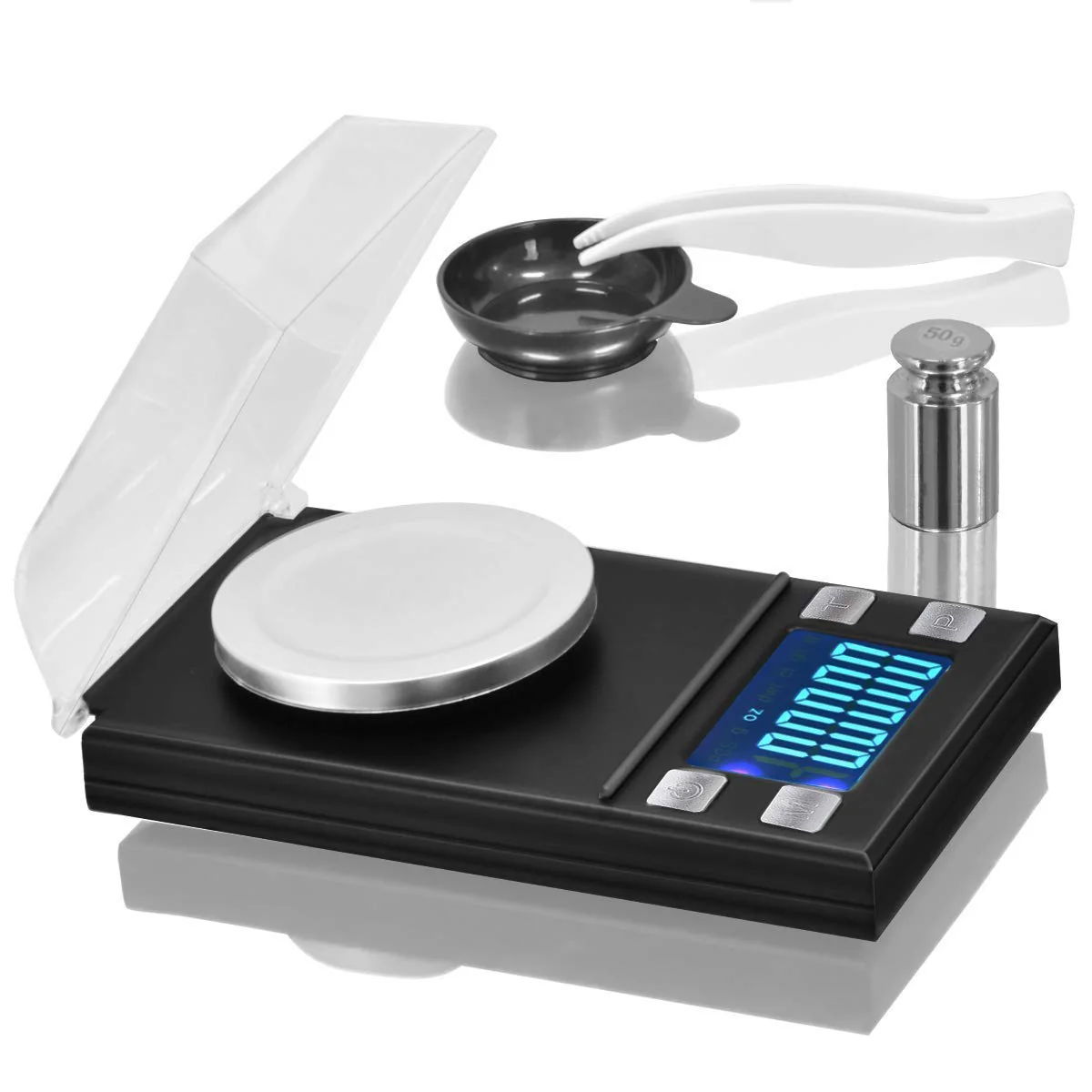
When it's time to mix, you need actual weights. Your scale doesn't understand '15%'—it needs grams (or milligrams for small batches). This is where conversion becomes critical.
When to use grams
- Actually weighing and mixing ingredients
- Calculating raw material costs
- Ordering supplies (you buy in grams/ml, not percentages)
- Working with very small amounts where precision matters
The conversion formula (and common mistakes)
Converting percentages to grams is straightforward multiplication:
Grams = (Percentage ÷ 100) × Total batch size
For example, if your formula calls for 15% hedione and you're making a 10g batch:
15 ÷ 100 × 10 = 0.15 × 10 = 1.5 grams of hedione
To go the other direction (grams to percentage), divide the ingredient weight by total batch weight and multiply by 100: if you have 1.5g of hedione in a 10g batch, that's (1.5 ÷ 10) × 100 = 15%.
Common conversion mistakes
The most frequent errors: forgetting to divide by 100 (using 15 instead of 0.15), confusing the dilution percentage with the formula percentage, and rounding errors that compound across many ingredients.
The dilution trap
Here's where it gets tricky. If your formula calls for 5% of an ingredient, but you're using a 10% dilution of that ingredient, you need to adjust. You'd actually weigh out more of the diluted material to get the same amount of raw ingredient.
Let's work through a concrete example. Say your formula calls for 5% ISO E Super in a 10g batch, but you're using a 10% dilution of ISO E Super (not the neat material):
- Target: 5% of the final batch should be pure ISO E Super
- In a 10g batch, that's 0.5g of pure ISO E Super needed
- Your dilution is 10% active ingredient (0.1g ISO E Super per 1g of solution)
- To get 0.5g of pure material: 0.5g ÷ 0.10 = 5g of the 10% dilution
Without this adjustment, you'd add only 0.5g of the dilution—giving you just 0.05g of actual ISO E Super, making your formula 10x weaker than intended. This is one of the most common sources of "my formula doesn't smell like it should" problems.
Scaling: where errors multiply
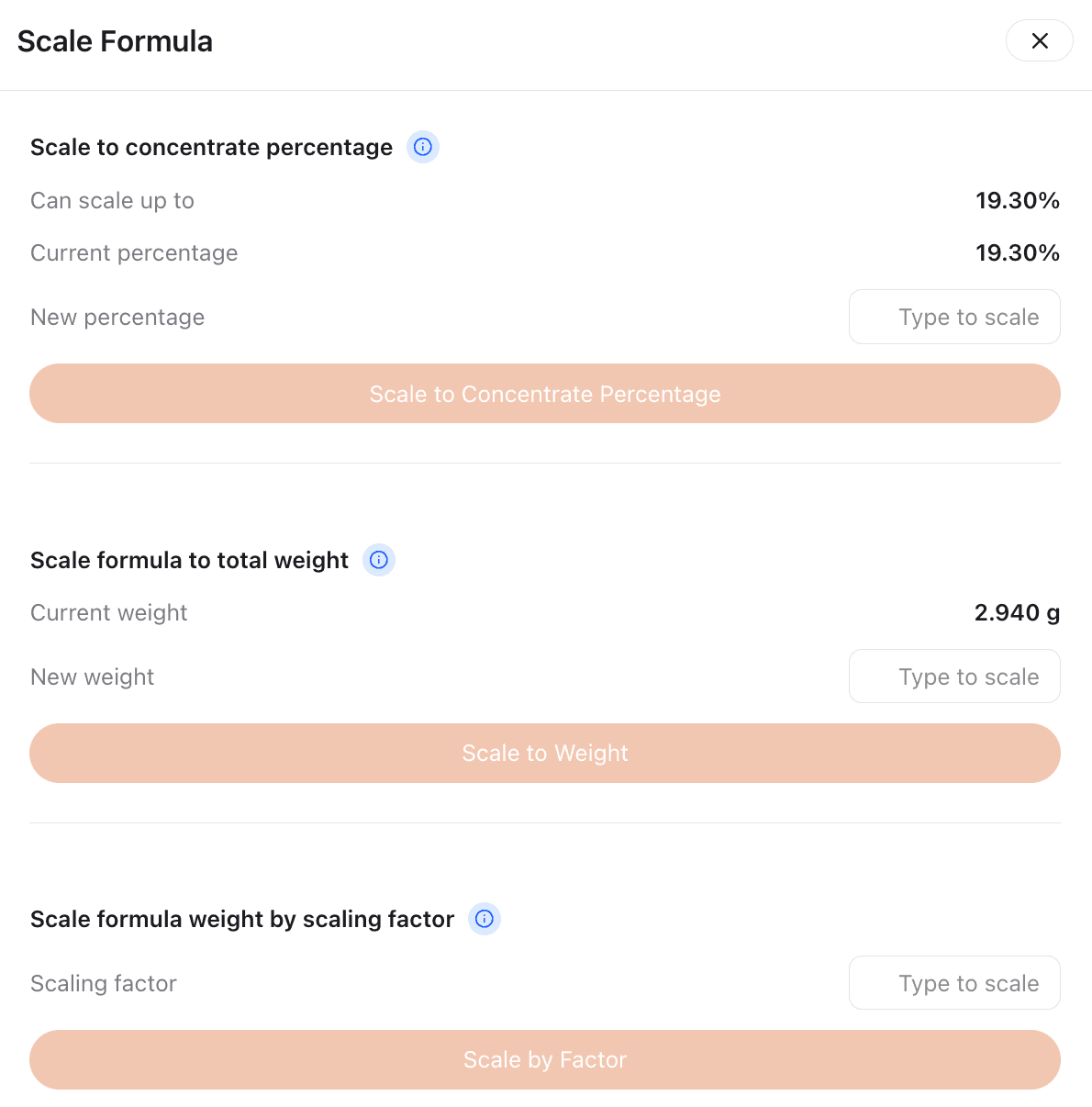
Scaling a formula from a test batch to production—or even just from 5g to 50g—is where conversion errors really hurt. A small rounding error in one ingredient becomes ten times larger. And if you're manually recalculating every line...
I once scaled a 20-ingredient formula by hand, got distracted, and accidentally doubled one ingredient while leaving another unchanged. Wasted half my sandalwood.
The scaling workflow problem
Here's what manual scaling looks like:
- Take your percentage formula
- Decide on new batch size
- Convert each percentage to grams (20+ calculations)
- Double-check your math
- Weigh each ingredient
- Hope you didn't make any errors
With 20 ingredients, that's 20 opportunities for error—more if you're also adjusting for dilutions.
The solution: auto-calculating tools
Modern formulation tools let you enter EITHER percentage or grams, and automatically calculate the other. Change the batch size, and every ingredient updates instantly. No manual math, no errors.
How auto-calculation works in practice
In Perfume Workbench, you can work in whichever mode feels natural:
Method 1: Enter percentages, get grams
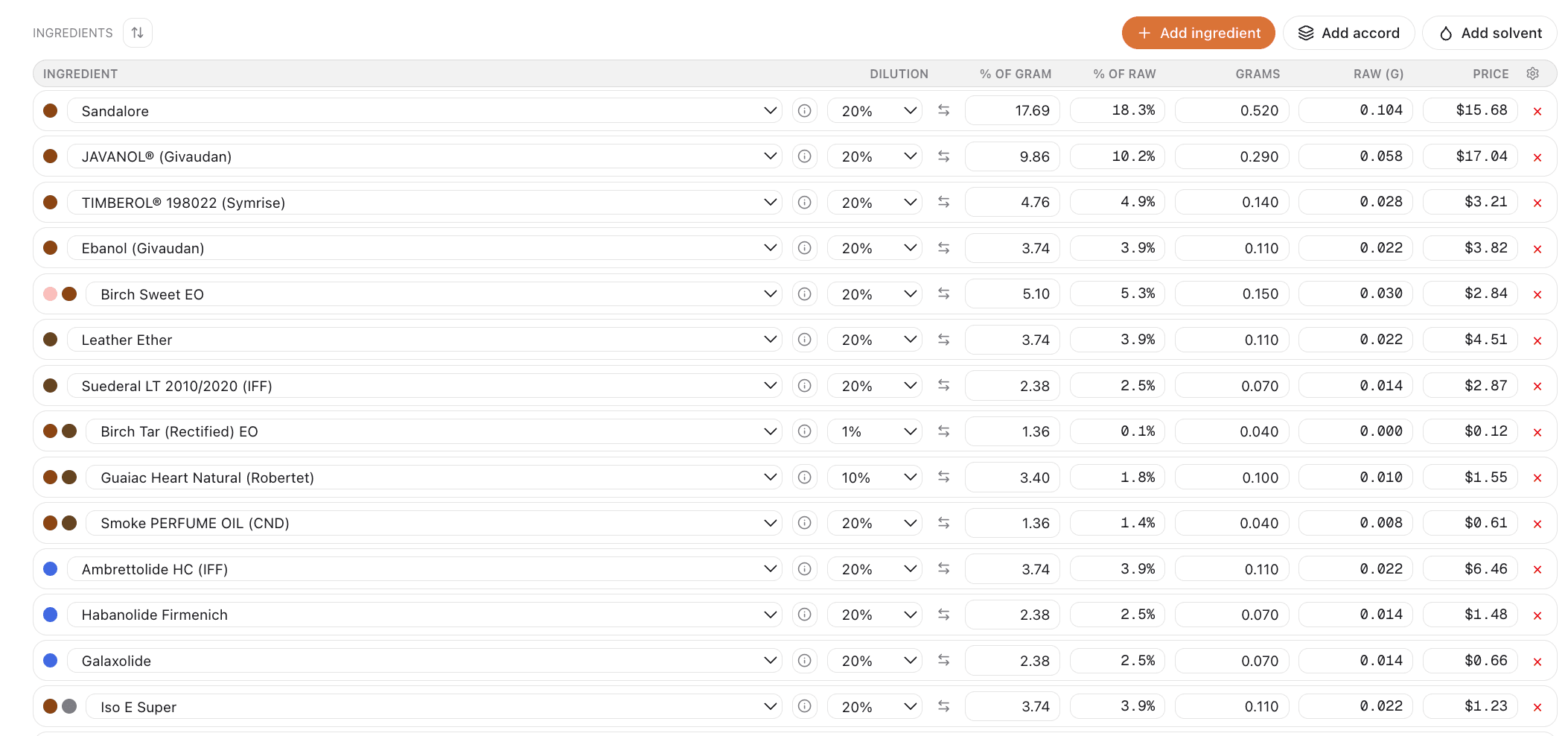
Design your formula in percentages (the way most formulas are written). Set your batch size. The grams column fills in automatically. When you want a bigger batch, just change the total—every gram value updates.
Method 2: Enter grams, get percentages
Sometimes you're experimenting and just want to add '2 drops of this, 1 gram of that.' Enter the weights directly, and the percentage column calculates automatically. Useful for trial batches where you're adjusting by feel.
Dilutions handled automatically
When you select a dilution for an ingredient, the calculator knows to adjust the weight. If you're using 10% ISO E Super instead of neat, it calculates how much of the dilution you need to achieve the target percentage of raw material in your formula.
Best practices for error-free formulation
- Store all master formulas in percentages
- Use a tool that auto-converts to grams
- Always specify which dilution you're using
- Double-check the first time you scale a formula
- Keep your ingredient library dilutions up to date
The 100% check
Your formula percentages should total exactly 100% (or close to it, with the remainder being solvent). If your total is way off, you've made an entry error somewhere. Good formulation tools show the running total so you catch this immediately.
Stop doing math by hand
Conversion errors are frustrating, wasteful, and completely preventable. Every minute you spend double-checking calculator math is a minute not spent on the creative work of perfumery.
The right tools eliminate this entire category of error:
- Enter percentages OR grams—the other updates automatically
- Change batch size and everything recalculates
- Select dilutions and the math adjusts
- See running totals to catch mistakes immediately
Perfume Workbench handles all of this automatically. Enter your formula however you think about it, scale to any batch size, and trust that the math is right. Try it free and stop worrying about conversion errors.